Sprout
An innovative app that allows you to nurture your own AI-powered companion, designed to support you on your path to improved mental health, wherever and whenever you need it.
Role
Lead Designer
Full-Stack Developer
Timeline
Mar. 2025
1 day Hackathon (3 additional weeks after hackathon)
Team
2 People
Buildspace S5 Cohort
Skills
Project Overview

Sprout is an AI-driven mental health app that provides accessible cognitive behavioral therapy (CBT) support through interactive features reminiscent of a trusted friend. Users engage with Sprout through human-like voice and text interfaces, participating in therapy sessions and completing personalized self-care exercises tailored specifically to them.
The app employs a gamified progression system, guiding users from basic levels to advanced stages as they achieve mental health milestones and collect "coins" that can be redeemed for mental health services in an innovative in-app marketplace. Built during Build4Good 2025, Sprout won 1st place among 89+ participants and was selected for the prestigious Buildspace S5 Cohort.
I. Defining the Problem Space
The Challenge
Approximately 20% of the population deals with mental health challenges each year, with 42 million people seeking treatment or counseling in 2021 alone. However, traditional therapy presents significant barriers:
- •Months-long wait times for therapy appointments
- •Session fees upwards of $100, making it inaccessible to many
- •Limited availability during crisis moments
- •Stigma preventing people from seeking help
The Opportunity
In 2021, adults aged 18-44 had the highest rate of mental health treatment at 23.2%, indicating a growing demand for accessible support that continues to rise annually.
With AI-driven cognitive behavioral therapy (CBT), we can democratize mental health care by providing immediate support directly from users' devices, anytime, anywhere, and at a fraction of the cost—making mental wellness accessible to everyone who needs it.
II. Competitive Analysis
Existing Solutions
Key Competitors
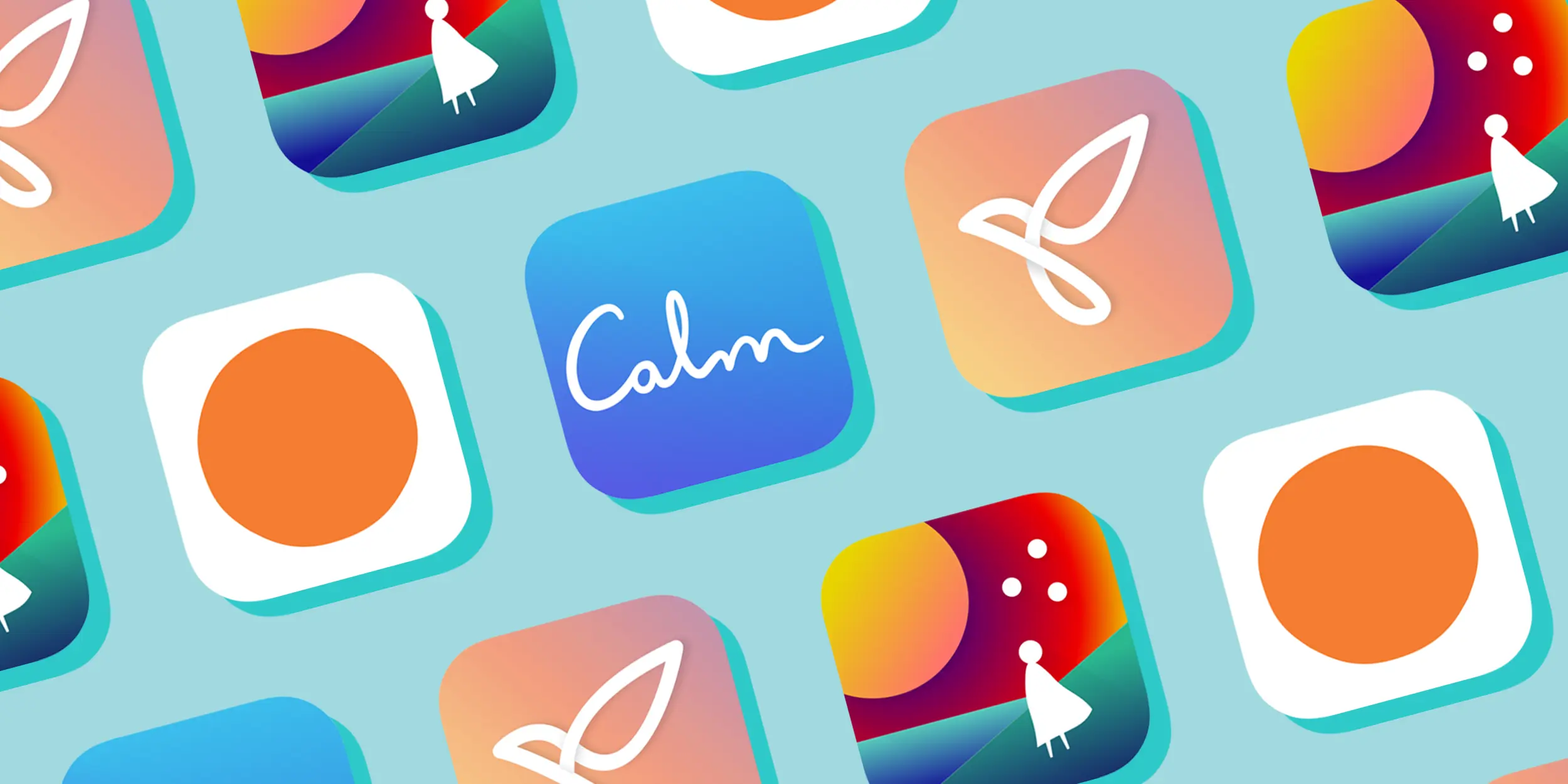
Headspace & Calm
Meditation/mindfulness only
Talkspace & BetterHelp
Human therapists, 2-day waits
Woebot & Wysa
AI chatbots, limited features
Youper
AI therapy, no gamification
Sanvello
Mood tracking, basic CBT tools
Traditional Therapy
Months waits, $100+/session
Sprout's Competitive Advantages
Gamification
Progression system & rewards
AI-Powered CBT
Human-like conversations in seconds
Rewards Marketplace
Redeem coins for real services
Affordable Access
Fraction of traditional therapy cost
III. Contextual Inquiry
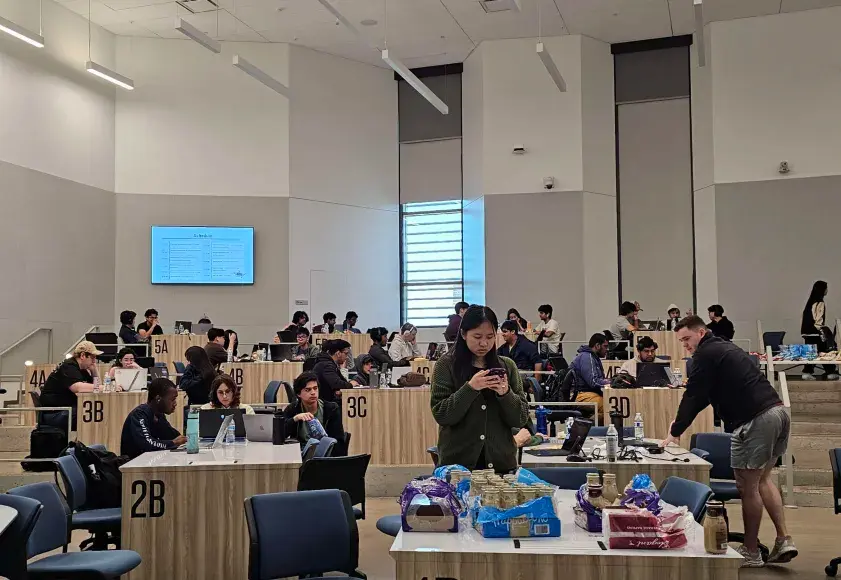
Through interviews with 15+ potential users aged 18-44 (our primary demographic representing 23.2% of mental health treatment seekers), we discovered critical insights about accessibility barriers and engagement preferences.
"I need support now, not in three months when I finally get an appointment."
- College Student, Age 22
"I can't afford $100+ per session every week, but I still need help managing my anxiety."
- Working Professional, Age 28
"I wish there was something more engaging than just meditation apps that would actually help me work through my problems."
- Graduate Student, Age 25
IV. Affinity Mapping
Key Insights
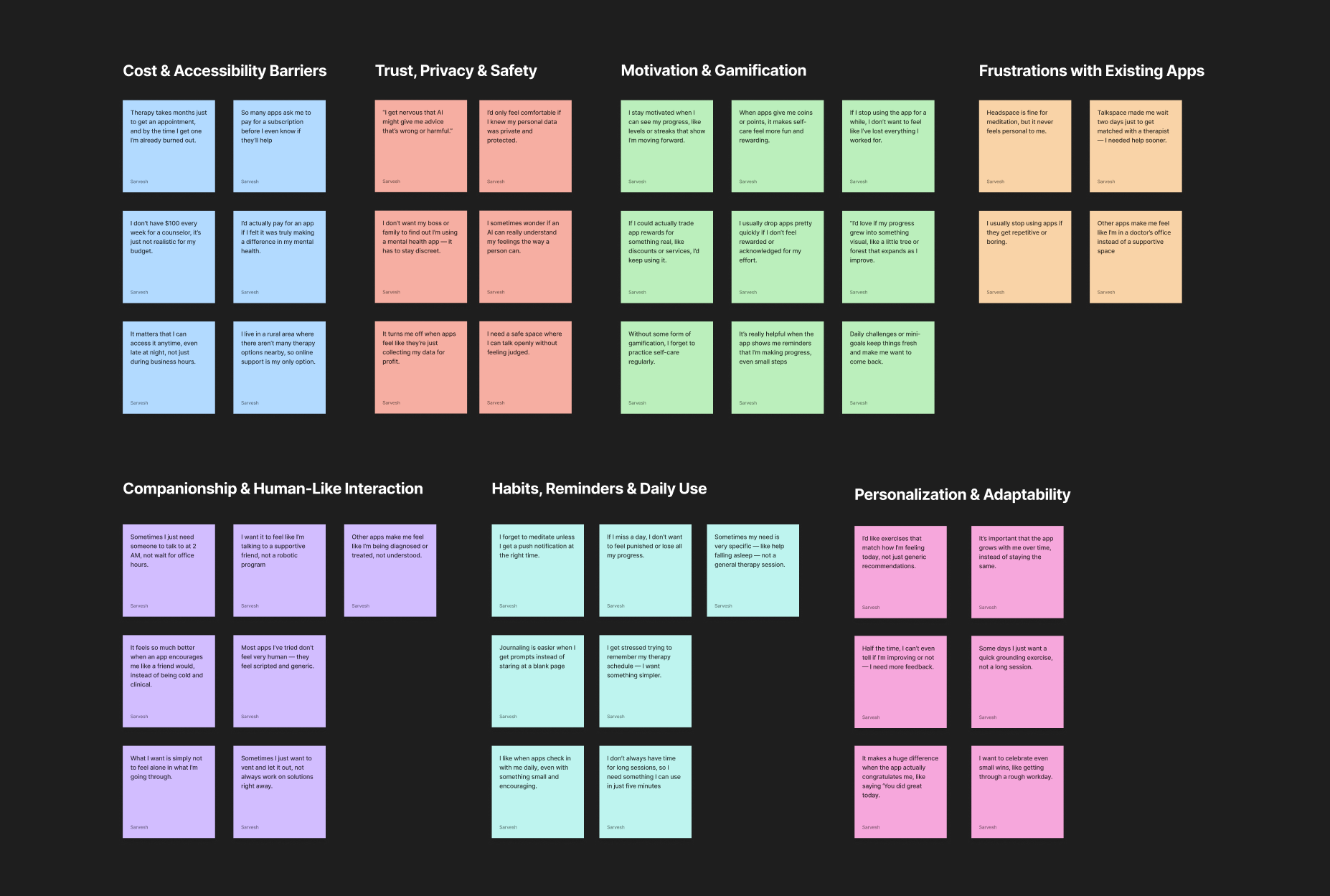
Affinity mapping helped us synthesize user feedback for Sprout by clustering raw statements into themes that revealed core needs. Users consistently spoke about cost & accessibility ("I can't afford $100 therapy sessions"), showing the need for affordable, on-demand support. Trust & privacy emerged as another cluster, reflecting fears about AI advice and data safety. Gamification & motivation highlighted how progress tracking, coins, and rewards keep users engaged. Companionship & human-like interaction showed the desire for Sprout to feel like a supportive friend rather than a clinical tool. Habits & reminders revealed the importance of simple daily nudges and flexible exercises, while personalization & adaptability emphasized tailoring experiences to mood and progress. Finally, frustrations with existing apps underscored gaps Sprout can fill with instant, empathetic support. These clusters matter because they transform scattered feedback into actionable design directions, ensuring Sprout's features directly answer user needs.
💰 Cost & Accessibility
Affordable, on-demand support
🔒 Trust & Privacy
AI advice & data safety
🎮 Gamification
Progress, coins & rewards
💙 Companionship
Supportive friend feeling
🔔 Habits & Reminders
Daily nudges & exercises
✨ Personalization
Tailored to mood & progress
⚠️ App Frustrations
Gaps to fill with empathy
🎯 Core Themes
Actionable design directions
Cost & Accessibility
Affordable, on-demand support
Trust & Privacy
AI advice & data safety
Gamification
Progress, coins & rewards
Companionship
Supportive friend feeling
Habits & Reminders
Daily nudges & exercises
Personalization
Tailored to mood & progress
App Frustrations
Gaps to fill with empathy
Core Themes
Actionable design directions
V. User Personas

Sarah
College Student, 21 | Part of 23.2% aged 18-44 seeking mental health support
Struggles with anxiety and depression from academic pressure. Can't afford $100+ therapy sessions or wait months for appointments. Needs engaging, immediate support that fits her budget and lifestyle.
Goals: Accessible therapy, gamified engagement, immediate crisis support
Frustrations: 3-month wait times, $100+ sessions, boring meditation apps
Why Sprout: Instant AI therapy, rewards system, affordable freemium model

Alex
Working Professional, 28 | Managing chronic stress & anxiety
Experiences work-related burnout and chronic stress. Tried Headspace/Calm but needs more than meditation. Looking for proactive mental wellness tools that provide real therapeutic value without professional therapy costs.
Goals: CBT-based therapy, stress management, mental wellness tracking
Frustrations: High therapy costs, limited meditation app effectiveness, stigma
Why Sprout: Human-like AI therapy, personalized exercises, privacy
VI. Our Proposed Solution
Introducing Sprout
Think about a time you stayed up with your best friend talking about life's ups and downs, but in a completely safe space. Sprout is exactly that, except it uses AI trained on cognitive behavioral therapy (CBT) datasets. It feels remarkably human-like, providing support and guidance every step of the way.
What sets Sprout apart is our unique gamified approach to mental wellness. Users grow their Sprout from plant to tree to forest, earning coins that can be redeemed for real mental health services in our innovative marketplace.
🌱 Gamified Growth
Progress from plant to forest while achieving mental health milestones
💬 Voice & Text Therapy
Human-like AI conversations trained on CBT principles
🎯 Personalized Exercises
Daily self-care activities tailored to your needs
Freemium Business Model
Basic features free, premium subscription for unlimited voice/text access. Users earn coins through engagement that can customize their companion or redeem mental health services from partnering businesses in our marketplace—creating multiple revenue streams while incentivizing mental wellness.
VII. Hopping into Figma
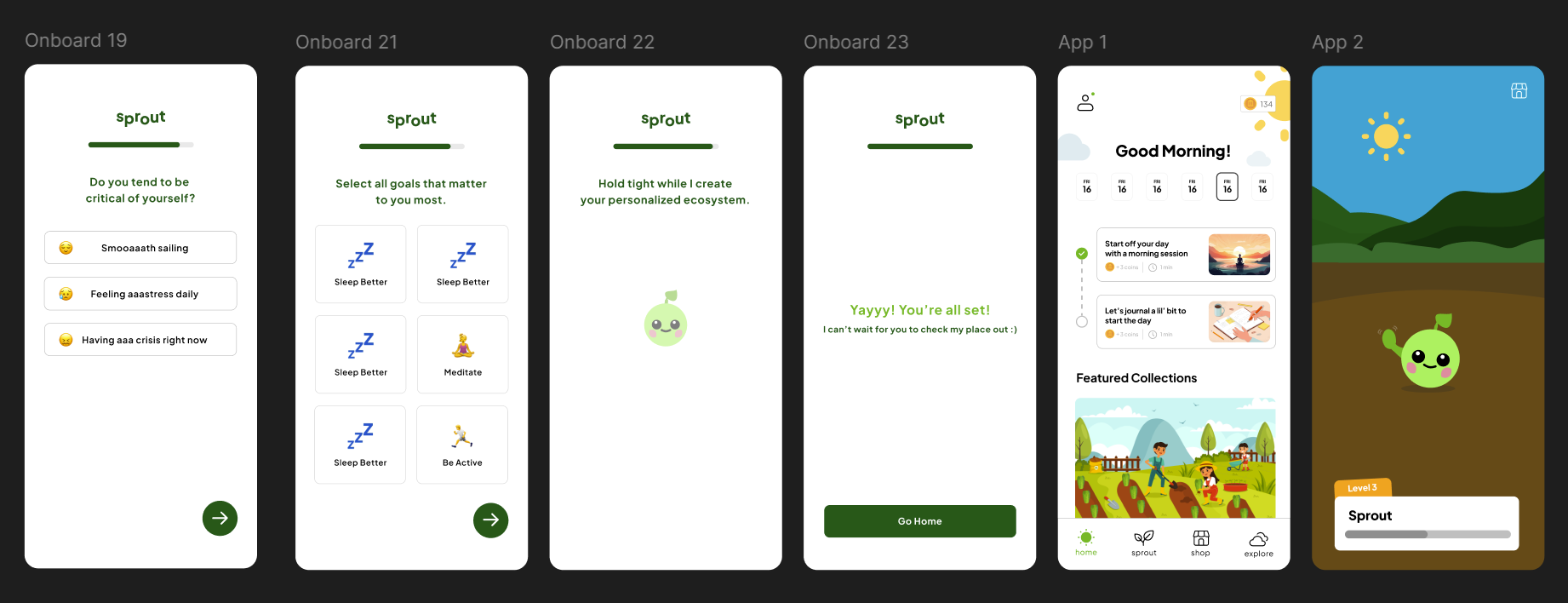
Starting with low-fidelity wireframes, we mapped out the core user flows and interaction patterns. The design evolved through multiple iterations based on user feedback and usability testing.
VIII. Usability Tests
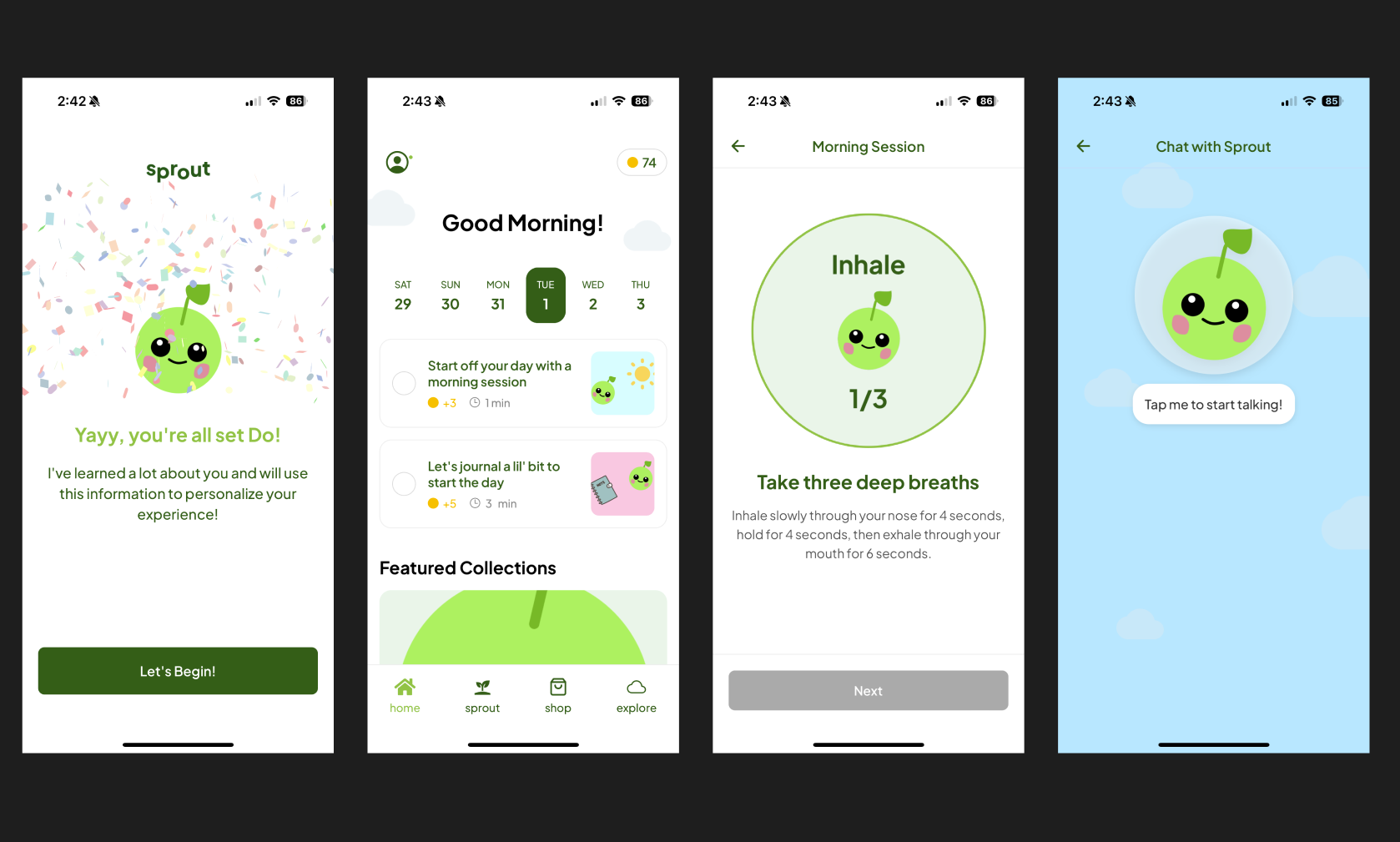
Understanding User Behaviors and Patterns
Conducted 10+ usability tests with target users to validate design decisions and identify pain points in the user experience.
95% task completion rate on core flows
Average session duration: 12 minutes
High satisfaction with conversation quality
Found the AI responses helpful
Felt comfortable sharing emotions
Average UX rating
Would recommend to a friend
IX. Final Prototype
Introducing the Sprout Mobile Companion!
🏆 Winner: 1st Place Best UI/UX at Build4Good 2025 | View on Devpost • View on Figma
🌱 Plant to Forest Progression
Watch your companion grow from plant to tree to forest as you achieve mental health milestones
🪙 Rewards Marketplace
Earn coins through engagement to customize your companion or redeem real mental health services
📝 Personalized Self-Care
Daily exercises, meditation reminders, journaling prompts, and habit tracking tailored to you
X. Thank You

What's Next on the Horizon
With a completed prototype and back-end development, Sprout is on track to launch in 3-4 months. Currently in development as part of the Buildspace S5 Cohort, here's our strategic roadmap:
📊 User Research & Testing
Conduct thorough testing to gather insights into user preferences, pain points, and usability issues
🚀 Launch Strategy
App store optimization, social media marketing, and partnerships with mental health organizations
🤝 Affiliate Marketing
Partner with influencers focused on self-growth and mental wellness to drive awareness
🔄 Iterative Improvement
Continuous user feedback integration and feature optimization post-launch